An original document should be easy to find without being handled every time someone needs a copy. A useful paper system keeps originals, working copies and current-task papers visibly separate. It also protects the sheets from ordinary household problems such as spills, folds, sunlight and crowded drawers.
You do not need an elaborate archive cabinet to begin. Start with the records you currently use and a small number of clearly labelled folders. The goal is a system that reduces handling and confusion, not a decorative arrangement that is difficult to maintain.
Give originals a different home
Choose a dedicated location for original certificates and other important records. Keep it distinct from the folder used for current applications. When you need a copy, take the original out deliberately, make the copy and return it before moving on to the next task.
Do not rely only on a coloured cover if several folders look alike. Add a plain written label that describes the role of the folder. Avoid displaying sensitive identifiers on the outside. A label should help a trusted household member navigate the system without revealing the contents to every visitor.
If several people share the storage area, agree on the meaning of the folders. “Originals” should not gradually become the place for every useful photocopy. A simple rule that everyone understands is more durable than a complicated filing scheme maintained by only one person.
Separate protection from permanent alteration
A sleeve can protect a sheet from handling, but it is not a reason to alter the original. Do not punch holes, add adhesive labels over information or staple unrelated records together merely to make them fit a binder. Choose storage that accommodates the document rather than modifying the document to fit the storage.
Be especially cautious with lamination. It is a permanent change and may affect how a document is inspected or handled. This guide does not recommend laminating official originals. Ask the issuer or receiving authority when the treatment of a particular record is uncertain.
If you need a note, put it on a separate cover sheet or removable folder tab. Keep the face of the original clear. A private reminder about a future application does not belong across a stamp, signature or machine-readable code.
Choose sleeves and folders for the actual size
Measure the documents before buying storage supplies. A sheet that is slightly larger than a familiar paper size can be damaged by a sleeve that is too tight. The opening should allow you to remove the document without bending corners or dragging a raised seal against the edge.
Do not overfill a sleeve with a thick bundle. It becomes harder to see what is inside and easier to pull out the wrong record. Use a separate sleeve for distinct originals where practical, with working copies stored elsewhere. The point is controlled handling, not maximum capacity per pocket.
For longer-term storage of valuable or delicate material, consult preservation guidance from a qualified archive or conservator about suitable materials. Marketing words such as “premium” or “protective” are not a full materials specification. Do not assume every plastic sleeve is appropriate for every document.
Make a retrieval list without copying every detail
Keep a private inventory that tells you which records exist and where they are stored. It does not need to reproduce all personal fields. A document type, holder, issuing context and storage location may be enough to prevent a prolonged search.
If a record is temporarily away from its usual folder, put a simple placeholder note in its place. Record who has it and why, without exposing unnecessary details. This is particularly helpful when a trusted family member is preparing an application on someone else's behalf.
Avoid keeping the only inventory inside the same bundle you would struggle to locate. A separate private note can help you find the right folder, but consider who can access that note. The inventory itself reveals which records a household holds and deserves thoughtful storage.
Organise working copies by task
A current-task folder can contain the receiving notice, a copy of the relevant record, your preparation notes and the acknowledgement. That grouping helps you understand the application without repeatedly disturbing the original-document folder.
Label copies clearly enough to distinguish them from originals. Do not stamp or write across official information in a way that could cause confusion. A cover sheet or folder label can identify the bundle as working copies without altering every page.
When the task ends, review the working folder. Keep what is required for your records and move completed material out of the active area. Do not destroy documents simply because the desk looks crowded. Retention needs depend on the record and its purpose, and this guide does not set a universal legal retention period.
Plan for ordinary household accidents
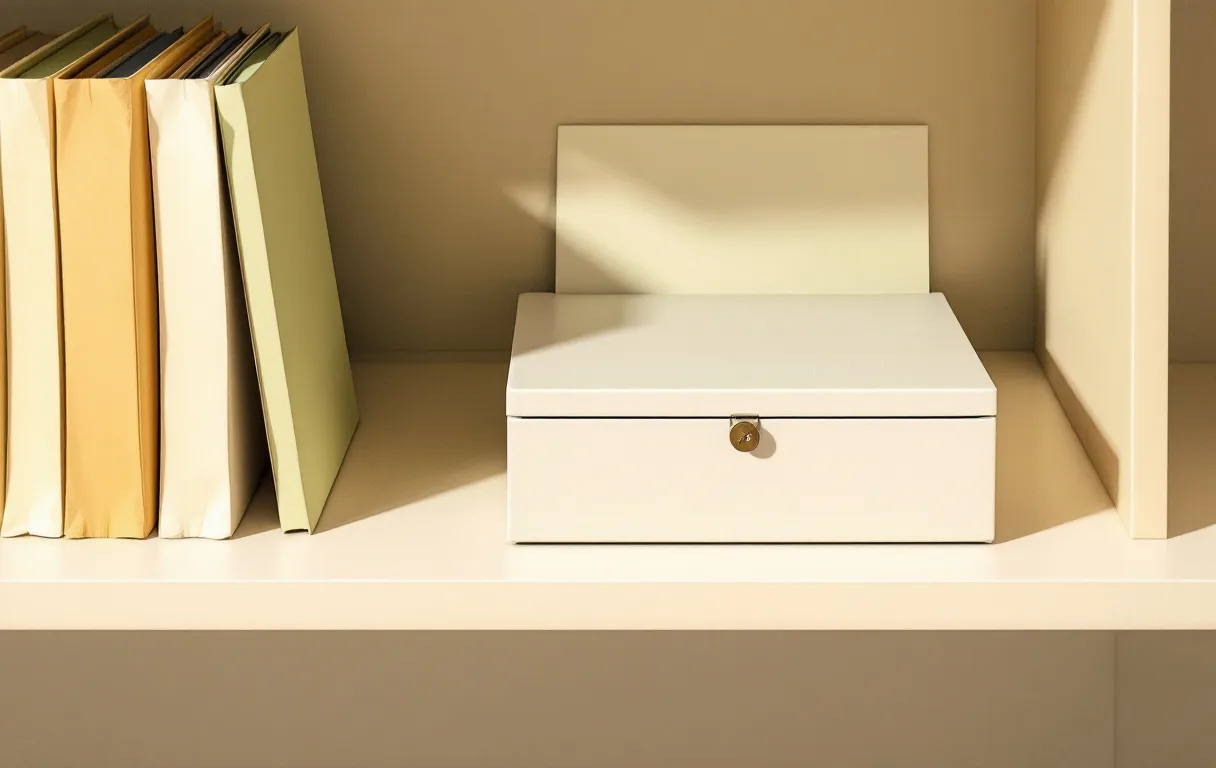
Keep documents away from places where water regularly appears: a kitchen surface, an open window during rain or the floor beneath a pipe. A high shelf can reduce some risks, but the right location also needs to be accessible to the people who legitimately use the records.
Avoid prolonged direct sunlight and heavy pressure from other objects. Do not stack damp papers into a closed sleeve. If a document has been wet or damaged, seek appropriate advice before applying heat, chemicals or aggressive flattening methods that could make the damage worse.
A box or cabinet is one layer of protection, not a guarantee against every event. Think about the practical route for taking essential records with you when necessary, while keeping routine access controlled. Do not advertise the location of important documents in a public checklist or social post.
Keep digital copies as a separate aid
A readable scan can reduce everyday handling of the original and help you inspect information before a task. It does not automatically replace the original or satisfy every recipient. Follow the actual request and the issuer's available digital-document routes.
Use the phone-scan workflow to create a complete, clear copy. Keep the digital master unchanged and label any resized or combined working version separately. Avoid putting identity numbers into the filename just to make searching easier.
Store a backup in a different controlled location if you can do so safely. A copy on the same failing device is not a useful fallback for that device's failure. At the same time, do not spread private documents across many accounts that you no longer maintain. A small, understood backup plan is better than uncontrolled duplication.
Make the system usable for a trusted helper
A family filing system should not depend entirely on one person's memory. Explain the folder roles to the person who may legitimately need to help. Show them how to locate the inventory and how to return an original after use.
Keep access proportionate. A helper preparing one application does not necessarily need access to every household record. Share the relevant folder or copy for the specific task. Do not place account passwords inside the paper folder simply because the task also has an online component.
If responsibilities change, update the system. A folder labelled for a person who no longer handles the records may continue to cause confusion. A short review of names, locations and active tasks can prevent the filing arrangement from becoming a historical puzzle.
Buying supplies with restraint
Begin with the documents you have, then choose sleeves, folders or a box that fit them. Avoid a large matching set until you know which sizes and opening styles work. A small trial pack can reveal whether pages slide in cleanly and labels remain readable.
Check the current seller's dimensions, material description and return terms. Product photographs can make a folder look deeper or sturdier than it is. For important originals, the details of the material and fit matter more than colour coordination or a high advertised pocket count.
Our document desk provides equipment selection notes. These are optional purchases, not requirements for receiving a certificate. A clean, existing folder used consistently may improve retrieval more than a new storage product used without clear roles.
A fifteen-minute reset
Choose one active task. Locate the original, create or identify its working copy and give the acknowledgement a place. Put the original back in the original-document folder. Write one clear next action on the task note.
Then stop. You do not need to reorganise the entire household archive to improve today's paperwork. Repeat the process with another task when you have time. Small, consistent decisions make the filing system easier to trust.
Use the document checklist if a visible sequence helps. The result you want is simple: the original is protected, the working copy is easy to use and the next person can understand which is which without guessing.
Further reading
For material-specific storage cautions, consult the Library of Congress guidance on works on paper. It discusses careful handling, protective enclosures and situations where conservation advice is appropriate. A fragile or damaged original needs more consideration than an ordinary working photocopy.